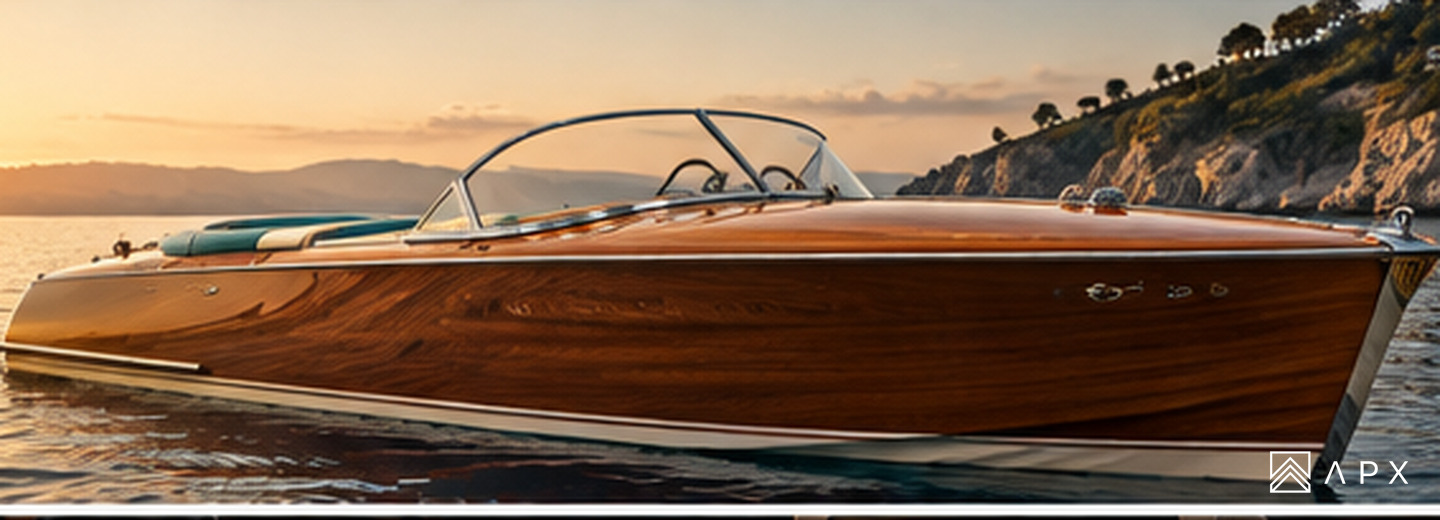
Classic Riva runabouts can behave more like collectible design objects than depreciating boats. We examine provenance, restoration and carrying costs.
Executive Summary
Some boats are transport; others become design objects. Classic Riva runabouts sit firmly in the second category. In October 2025, a 1974 Riva Aquarama Special sold for $500,000 on Bring a Trailer after extensive refurbishment, while RM Sotheby’s sold the 1963 Riva Ariston 'Telstar' for €276,000 at its Monaco auction in April 2026. The values are modest compared with a large classic yacht, but they show that provenance, originality and cultural identity can support a collectible market beyond normal marine depreciation.
For UHNW buyers, classic boats require a different investment lens from cars or watches. They are usable assets exposed to water, mechanical wear and expensive maintenance. A beautiful restoration can preserve value, but over-restoration, undocumented replacement timber or modernisation can erode historical authenticity. Storage, transport and specialist workmanship also create meaningful carrying costs.
Key Takeaways
- A 1974 Riva Aquarama Special sold for $500,000 in 2025 after a documented refurbishment programme.
- RM Sotheby’s sold the 1963 Riva Ariston 'Telstar' for €276,000 in Monaco in 2026.
- Classic marine value is driven by model, hull identity, provenance, originality, restoration quality and documentation.
- Unlike many collectibles, a boat can deteriorate rapidly if storage and maintenance are neglected.
- The strongest examples function as cultural-design objects as much as recreational craft.
Why Riva Became Collectible
Carlo Riva transformed the family boatbuilder into a symbol of post-war Mediterranean luxury. Mahogany construction, polished metalwork, automotive-style detailing and associations with film stars, royalty and the Riviera created an identity that extends beyond the marine world. The Aquarama in particular became recognisable even to non-boating collectors.
That brand mythology matters because collectible markets need a story that survives changes in utility. A 1960s runabout is objectively less capable than a modern day boat, yet collectors may prefer it precisely because it represents a particular era of design and craftsmanship.
What Determines Value?
Hull identity and model hierarchy
A correct hull number, build history and factory specification are foundational. Within the Riva market, Aquarama, Ariston, Tritone and other models occupy different price bands and have different collector followings.
Originality versus restoration
Classic boats often require substantial work simply to remain usable. The question is not whether restoration occurred but how it was executed and documented. Replacement planking, engines, chrome, upholstery and instruments should be recorded. A restoration by a recognised specialist can support confidence; cosmetic work that disguises structural issues cannot.
Provenance and cultural history
The 1963 'Telstar' sold by RM Sotheby’s had a documented connection to the family of Joan Miró and had appeared in books, advertising and media. Such history can differentiate one hull from another even when the underlying model is identical.
Carrying Costs Change the Equation
A classic boat is not a passive vault asset. Covered storage, haul-outs, varnish, engine servicing, surveys, transport, insurance and corrosion control are recurring requirements. In poor storage conditions, value can be destroyed faster than it can appreciate.
This means the economic case is strongest when the owner also derives lifestyle value. A family office buying a classic runabout solely for return should model annual carrying cost and eventual sale commission against realistic resale assumptions. The boat may be a compelling passion asset while still being a weak purely financial investment.
APX Perspective
Classic Rivas show how design provenance can interrupt the normal depreciation curve of marine assets. They are not a substitute for liquid investments, and maintenance risk is material, but exceptional examples can behave more like collectible automobiles than ordinary used boats. The investable proposition is narrow: documented, culturally significant hulls with high-quality restoration and recognisable model status.
Frequently Asked Questions
Are classic boats investable in the same way as classic cars?
They share some characteristics, but boats generally have higher maintenance exposure and are more sensitive to storage conditions and water-related deterioration.
Is a fully restored Riva worth more than an original one?
Not automatically. Quality, documentation and authenticity matter. A sympathetic, well-documented restoration can be valuable, while excessive replacement of original material may reduce collector appeal.
Should a buyer commission an independent survey?
Yes. Structural timber, hull moisture, engines, electrical systems and prior repairs should be assessed independently before purchase.
Related APX Intelligence
Sources & Further Reading
APX Intelligence is provided for general information only and does not constitute investment, legal, tax or financial advice. Collectibles and alternative assets can be illiquid, difficult to value and subject to material transaction, storage, insurance and authenticity risk.