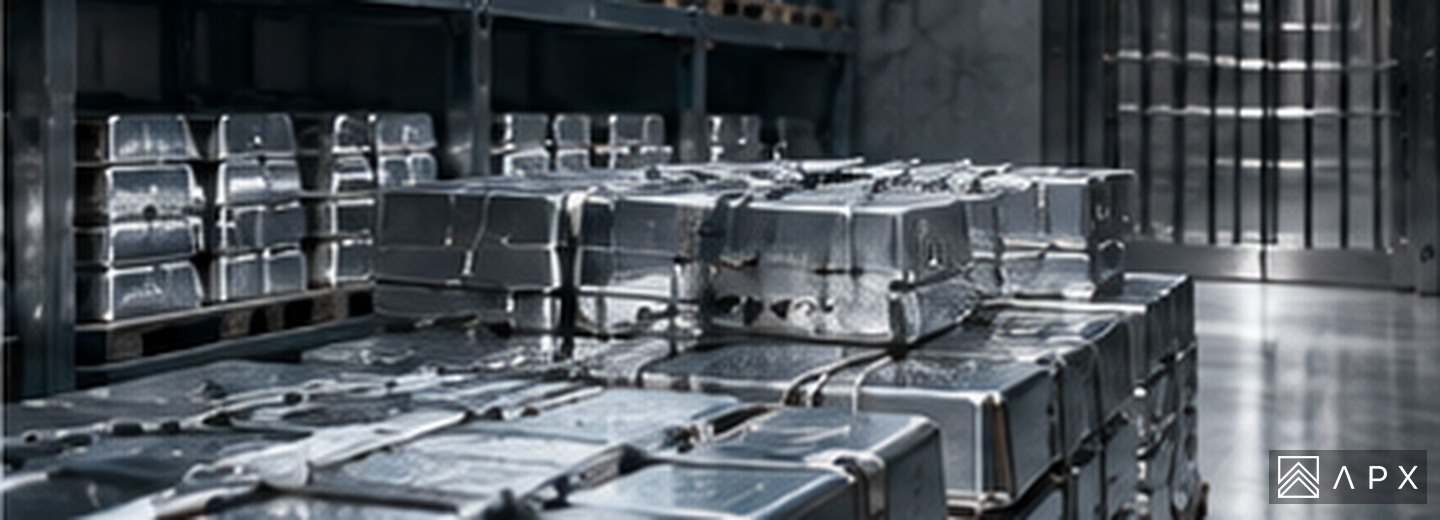
Silver can offer a different monetary and industrial exposure from gold, but at family-office scale its bulk, storage and logistics materially change the economics.
Executive Summary
Silver occupies an unusual position between precious-metal investment and industrial commodity. That dual identity can make it attractive in a diversified hard-asset allocation, but it also creates a practical challenge: silver is far less value-dense than gold.
At meaningful portfolio sizes, the decision is not simply whether silver may appreciate. Families need to model vault space, handling, transport, insurance, spreads and the cost of moving hundreds of heavy bars through the custody chain.
Key Takeaways
- The Silver Institute expects the market to remain in deficit in 2026 and forecasts stronger physical investment demand.
- LBMA Good Delivery silver bars are around 1,000 troy ounces, making a large allocation physically substantial.
- Storage and transport costs are proportionally more important for silver than for gold.
- Industrial demand adds a different economic driver but can also increase cyclical volatility.
- A family office should compare physical silver with exchange-traded or professionally allocated exposure after all carrying costs.
The Investment Case Is Not Just “Cheap Gold”
Silver has its own supply-and-demand structure. It is used in electronics, automotive applications, grid infrastructure and other industrial processes while also attracting coin, bar and exchange-traded investment demand. The Silver Institute’s 2026 outlook expects physical investment to rise while the market remains in structural deficit.
That mixture can create periods when silver behaves partly like a monetary metal and partly like an industrial input. Investors attracted to the metal as a diversification tool should therefore expect different volatility and macro sensitivity from gold.
The Physical-Scale Problem
An institutional silver allocation occupies far more space than an equivalent-value gold allocation. Good Delivery silver bars are roughly 1,000 troy ounces each. A seven-figure position can therefore translate into a significant quantity of metal, pallets, handling and vault capacity.
That physical reality matters when comparing quoted storage rates. A seemingly small annual percentage can understate operational fees for movements, inspection, withdrawal, delivery and insurance. Families should model a realistic holding and exit scenario rather than comparing headline custody percentages alone.
Chain of Custody and Resale
Professional liquidity depends on recognised bars and trusted custody. Metal leaving an accepted chain may require re-weighing, inspection or assay before a buyer will pay institutional prices. Documentation should therefore travel with the holding: refiner, serial, weight, fineness and movement records.
For very large positions, the family should ask whether the vault can support partial releases, whether bars remain acceptable to the intended dealer network and how quickly metal can be mobilised during stressed markets.
Physical or Financial Exposure?
Some families want silver precisely because it is tangible. Others simply want price exposure. Those are different objectives. Physical silver offers direct custody but adds storage and logistics; exchange-traded vehicles can be more liquid but reintroduce vehicle, counterparty and market-structure considerations.
The correct structure depends on whether the purpose is strategic wealth preservation, tactical trading, inflation diversification or an industrial-metals allocation.
APX Perspective
Silver can be compelling, but its physical footprint means the family-office hurdle rate should include custody and logistics from day one. The more valuable the allocation becomes, the less sensible it is to treat storage as a footnote.
Frequently Asked Questions
Why is silver more expensive to store than gold?
Because much more physical volume and weight are required to represent the same monetary value, increasing space and handling requirements.
What is a typical wholesale silver bar?
LBMA Good Delivery silver bars are approximately 1,000 troy ounces, subject to the current technical tolerances.
Does silver have industrial demand?
Yes. Industrial uses are a major part of silver demand, which gives the metal a different economic profile from gold.
Related APX Intelligence
Sources & Further Reading
APX Intelligence is editorial information only and does not constitute investment, legal, tax or financial advice. High-value physical assets can be illiquid, costly to insure and store, and may involve jurisdiction-specific legal or tax considerations.