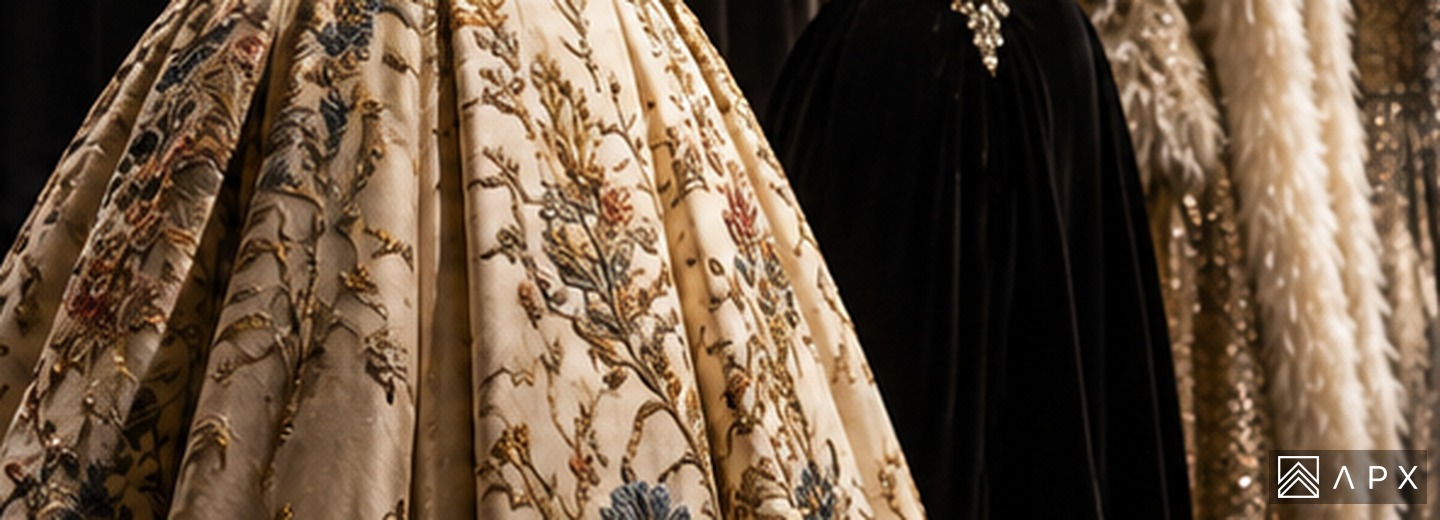
Vintage couture can move beyond clothing into design history. APX examines provenance, conservation, designer importance, and what makes fashion genuinely collectible.
Executive Summary
Museum collections demonstrate that fashion can be treated as an important applied art, with haute couture preserved for design, craftsmanship and cultural significance rather than wearability alone.
For private collectors, that creates an emerging distinction between “vintage fashion” as second-hand luxury and museum-grade couture as archival material. The latter can involve extraordinary provenance and design importance, but it also brings conservation, storage and condition challenges unfamiliar to conventional luxury buyers.
Key Takeaways
- The Met’s Costume Institute holds tens of thousands of fashion objects and maintains specialist conservation facilities.
- Provenance can add significant cultural value, but design importance can matter even without celebrity ownership.
- Textiles are fragile: light, humidity, pests, folding and display can cause irreversible damage.
- Original labels, atelier markings, runway documentation and photographs can support attribution.
- Liquidity is thinner than handbags or watches, so collection quality should not be confused with easy resale.
From Wardrobe to Archive
The Costume Institute’s history shows how fashion moved into the museum context. Its collections span centuries and include haute couture, accessories, designer archives and works selected as masterful examples of their periods.
Private collectors increasingly approach important garments the same way: not as clothes to be worn, but as design objects with creator, date, collection and provenance.
What Makes a Garment Collectible?
Designer name alone is not sufficient. A strong object may be a defining runway look, an early or rare example, a technically important couture piece, a garment with documented historical ownership or a design represented in museum collections and major exhibitions.
Documentation can include runway photographs, lookbooks, invoices, atelier labels and archival references. The more a piece can be placed within a designer’s creative history, the stronger the scholarly and collector case.
Conservation Is the Hidden Cost
Textiles can fade, weaken, stain, oxidise and attract pests. Sequins, feathers, leather, plastics and adhesives can degrade differently within the same garment. Professional costume conservation therefore focuses on stable storage, support, light control and minimal handling.
A family office collecting important fashion should budget for museum-quality boxes, mounts, climate control, specialist insurance and periodic condition assessments.
Valuation and Exit
The market is selective. A spectacular museum-quality garment can be historically important yet difficult to price because comparable sales are rare. Auction estimates may therefore reflect specialist judgement rather than a deep continuous market.
Collectors should buy with long holding periods and cultural enjoyment in mind, treating financial appreciation as uncertain rather than guaranteed.
APX Perspective
The most interesting fashion collections are archives, not wardrobes. Once a garment is acquired for historical significance, conservation discipline and provenance become as important as the designer label.
Frequently Asked Questions
Is vintage couture an investment?
It can appreciate, but liquidity is limited and valuations are highly object-specific. It is better approached as a passion asset with potential financial upside.
Should collectible couture be worn?
Some pieces can be worn carefully, but museum-grade objects may be too fragile or historically important for regular use.
What documentation matters?
Designer labels, invoices, runway references, exhibition history, photographs, correspondence and ownership provenance can all support attribution and value.
Related APX Intelligence
Sources & Further Reading
APX Intelligence is editorial information only and does not constitute investment, legal, tax or financial advice. High-value physical assets can be illiquid, costly to insure and store, and may involve jurisdiction-specific legal or tax considerations.