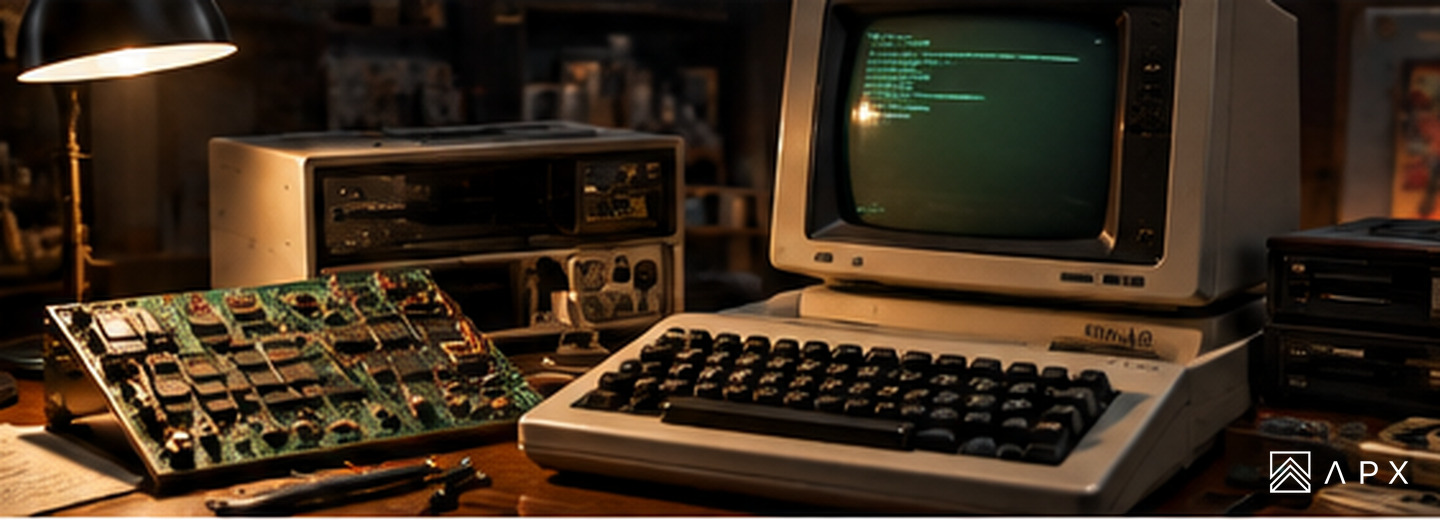
The Apple founding agreement sold for $2.515 million in 2026. We examine why early computers, founder provenance and digital history are becoming collectible.
Executive Summary
Technology history is becoming collectible history. In January 2026, Christie’s sold the original Apple Computer Company partnership agreement signed by Steve Jobs, Steve Wozniak and Ronald Wayne for $2.515 million. The document joined an established market for Apple-1 computers, early mainframes, prototypes, manuals and objects linked directly to the founders of modern computing.
Unlike conventional electronics collecting, trophy technology is not about specification. The most valuable objects document a turning point: the first commercial machine, a founder-owned example, a production prototype, a landmark piece of software or a document that records the creation of a globally significant company. Provenance can be more valuable than functionality.
Key Takeaways
- The original Apple partnership agreement sold for $2.515 million at Christie’s in January 2026.
- Christie’s has estimated important Apple-1 computers in the hundreds of thousands of dollars, with fewer than half of the roughly 200 produced thought to survive.
- Founder provenance, first-generation status and documented technological significance drive the strongest values.
- Original components matter, but a non-working historically important machine can still be valuable if provenance is exceptional.
- Digital-era collectibles introduce unusual conservation issues including obsolete media, batteries, plastics, capacitors and data preservation.
From Obsolete Hardware to Cultural Artefact
The speed of technological replacement once worked against collectability. Old computers were discarded because the new model was faster, smaller and cheaper. That cycle destroyed much of the earliest hardware, packaging and documentation. As the history of computing has become central to the history of modern society, surviving first-generation objects have acquired a different status.
Paul Allen’s collection, sold in part by Christie’s in 2024, demonstrated how early computing can be presented alongside science, engineering and design. An Apple-1 from Steve Jobs’ office, early Xerox systems and supercomputers were treated not as obsolete equipment but as milestones in the development of the digital world.
What Makes Vintage Technology Valuable?
Historical firsts
First commercial products, first production runs and technologies that changed user behaviour have the broadest significance. The Apple-1 matters because it sits at the start of Apple and of user-ready personal computing.
Founder or institutional provenance
A standard surviving machine and a machine that sat on a founder’s desk are not equivalent. Corporate asset tags, letters, manuals, photographs and ownership history can transform the valuation.
Completeness and originality
Collectors should establish which boards, chips, cases, peripherals and manuals are original to the system. Restoration may be necessary for display or operation, but replacing key period components can reduce historical integrity.
Conservation Is Different for Technology
Electronics fail even when unused. Electrolytic capacitors dry out, batteries leak, rubber perishes, CRTs become fragile and plastics discolour. Powering an important machine can itself create risk. A conservation plan should distinguish between preservation and operation, documenting any replaced parts and retaining originals where practical.
Data can matter too. Original disks, tapes, ROMs and software may form part of the object's history. Specialist imaging and archival storage can preserve the information without repeatedly operating fragile media.
APX Perspective
Vintage technology has the characteristics of an emerging museum-grade collectible field: cultural importance, finite surviving supply and a growing class of wealthy buyers who built their careers around technology. The strongest assets will be those that can be explained in one sentence—'the document that created Apple', 'the first Apple computer', 'a founder-used machine'—and supported by an equally clear chain of provenance.
Frequently Asked Questions
Does a vintage computer need to work to be valuable?
No. Functionality can help, but historical significance, originality and provenance may be more important. Operating a fragile machine can also create conservation risk.
Are Apple-1 computers still the key trophy object?
They remain among the most recognisable early personal computers, but founder documents, prototypes and other landmark systems can also command major prices.
What should be preserved with the hardware?
Original manuals, packaging, correspondence, invoices, software, peripherals and ownership records can materially strengthen provenance and value.
Related APX Intelligence
Sources & Further Reading
APX Intelligence is provided for general information only and does not constitute investment, legal, tax or financial advice. Collectibles and alternative assets can be illiquid, difficult to value and subject to material transaction, storage, insurance and authenticity risk.