
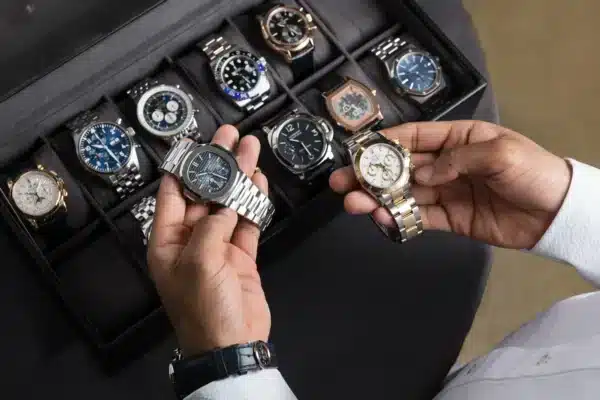
Why Luxury Watches Have Become an Alternative Asset Class
Explore why luxury watches have evolved beyond craftsmanship into an alternative asset class, and what sophisticated investors should understand about rarity, liquidity and long-term value.
For centuries, fine watches have represented precision engineering, craftsmanship and personal achievement. Increasingly, however, they are also being viewed through another lens—that of investment. While not every timepiece appreciates in value, the world's most sought-after watches have become recognised alternative assets within sophisticated portfolios.
Introduction
Luxury watches occupy a unique position in global wealth.
They are wearable, highly portable and, in many cases, remarkably durable stores of value.
Unlike traditional investments, they combine engineering, heritage, scarcity and emotional appeal.
Over the past two decades, growing global demand, constrained production and a thriving secondary market have elevated certain watches beyond collectible status into a recognised segment of the luxury asset market.
For many entrepreneurs and family offices, watches now represent more than personal enjoyment—they form part of a broader conversation around diversification and wealth preservation.
Scarcity Creates Value
The economics of luxury watches are driven less by materials than by scarcity.
Prestigious manufacturers deliberately limit production of their most desirable references.
Demand frequently exceeds supply, creating waiting lists that can extend for years.
This controlled availability has helped support values in the secondary market for selected models.
As with fine art or classic cars, rarity often proves more influential than intrinsic production cost.
Heritage Matters
The strongest-performing watch brands typically possess decades—or even centuries—of history.
Collectors value:
- Proven craftsmanship
- Historical significance
- Manufacturing consistency
- Brand prestige
- Limited production
- Independent certification
These characteristics create confidence that extends well beyond fashion trends.
The Importance of Provenance
In luxury watches, provenance can significantly influence value.
Original documentation, service history, authenticated components and ownership records all contribute to buyer confidence.
Exceptional examples with documented history frequently command substantial premiums over similar watches lacking complete provenance.
For serious collectors, authenticity is every bit as important as rarity.
A Global Secondary Market
The secondary market has matured considerably.
Specialist auction houses, established dealers and digital platforms have increased transparency and liquidity for many collectible watches.
This broader marketplace enables collectors and investors to buy and sell internationally with greater confidence than ever before.
However, liquidity varies significantly depending on brand, reference, condition and market sentiment.
Understanding the Risks
Luxury watches should not be viewed as guaranteed investments.
Values can fluctuate with economic conditions, collector demand and changes in fashion.
Investors should also consider:
- Authentication risks
- Counterfeit markets
- Insurance
- Storage
- Maintenance
- Transaction costs
As with any specialist asset, knowledge and due diligence remain essential.
Passion Should Come First
One principle consistently emerges among experienced collectors.
The most successful acquisitions are rarely driven solely by financial expectations.
Instead, buyers acquire watches they genuinely appreciate, recognising that long-term enjoyment provides value regardless of market performance.
Financial appreciation, when it occurs, becomes an additional benefit rather than the sole objective.
Looking Ahead
Global demand for exceptional craftsmanship continues to grow.
Emerging collectors, expanding international markets and increasing interest from younger generations are reshaping the luxury watch landscape.
At the same time, greater transparency, digital authentication and specialist advisory services are helping professionalise the market.
For sophisticated investors, luxury watches occupy an intriguing position between passion asset, portable wealth and collectible investment.
Institutional Verification & Statutory References
For family office investment committees, corporate fiduciaries, and horological asset managers, verification standards, auction authenticity frameworks, and market compliance should be cross-referenced against official statutory authorities:
| Regulatory & Verification Body | Scope of Authority | Primary Standard & Authentication Framework |
|---|---|---|
| FH (Federation of the Swiss Watch Industry) | Industry Standardization & Origin Protection | Swiss Ordinance on the Use of "Swiss" for Watches (Statutory 60% Swiss-value rule and technical compliance). |
| Fondation de la Haute Horlogerie (FHH) | Cultural Heritage & Technical Certification | FHH Fine Watchmaking Standards (Authentication of technical complexity, finishing, and historical manufacture). |
| CITES (UN Convention on International Trade) | Cross-Border Material Trade Compliance | CITES Appendix I & II Regulations (Export/import certification for exotic leather straps and precious materials). |
The APX Perspective
At APX, we believe luxury assets should be understood with the same discipline applied to any specialist investment.
Exceptional watches are not simply objects of craftsmanship; they are examples of how scarcity, provenance, heritage and global demand combine to create enduring value.
For collectors and investors alike, informed decision-making remains the foundation of successful long-term ownership.


